Tuesday, January 20, 2015

Best of 2014: Mark Cooper Versus America


19549885

Blurb:

Mark Cooper is angry, homesick, and about to take his stepdad’s dubious advice and rush Prescott College’s biggest party fraternity, Alpha Delta Phi. Greek life is as foreign to Aussie transplant Mark as Pennsylvania’s snowstorms and bear sightings. So, when the fraternity extends Mark a bid, Mark vows to get himself kicked out by the end of pledge period. But then he’s drawn into Alpha Delt’s feud with a neighboring fraternity.

Studious Deacon Holt is disappointed to learn Mark’s pledging Alpha Delt, his fraternity Phi Sigma Kappa’s sworn enemy. Mark is too beautiful for Deacon to pass up an invitation for sex, but beyond sex, Deacon’s not sure. He wants a relationship, but a difficult family situation prevents him from pursuing anything beyond his studies.

Mark and Deacon’s affair heats up as the war between their fraternities escalates. They explore kinks they didn’t know they had while keeping their liaison a secret from their brothers. But what Romeo and Juliet didn’t teach these star-crossed lovers is how to move beyond sex and into a place where they share more than a bed. That’s something they’ll have to figure out on their own—if the friction between their houses, and between Mark and America, doesn’t tear them apart.


Review:

Fantastic. I’ll admit to being nervous because I am emphatically not a fan of raunchy, R-rated American Frat comedies. There were moments, especially in the early chapters, when the authors skirted perilously close to cliché in the portrayal of Alpha Delta. But as we grow to understand, 90% of the problem is that the boys themselves have seen too many of those movies and seem intent on living up to their very questionable ideas of fun. But thanks to the authors’ overall self-consciousness, especially the clever allusions to Romeo and Juliet, the book deploys and then undermines the usual frat, excuse me Fraternity, clichés, creating a tender, insightful story about growing up, finding your place, and falling in love.

With Mark himself, the authors manage the almost miraculous balancing act of creating a character who struck me as being at once the epitome of the modern, disaffected teen and also wholly fresh and original. Crucial to this was the avoidance of the usual YA-friendly explanations for Mark’s behavior--a horrible step father, a neglectful mother, some early trauma--in favor something far more subtle and unexpected. Their restraint made Mark feel unusually real. In a lot of ways, Mark rebels because he doesn't have much to rebel against. He aggressively redefines his world to fit his need to lash out. This is a quality that we and Deacon discover gradually over time through dozens of small touches, instead of having it shoved down our throats in some tearful monologue.

All of this is good, but what made the book truly a pleasure to read was the writing. Though all of their books have been great, I think the Rock/Henry collaboration really comes into its own in Mark Cooper versus America. The narration is tight and energetic and perfectly infused with the highly distinctive idiom and mentality of its two MCs. I marked dozens of memorable, witty passages and phrases that just made me happy in the way that only terrific writing can:

The fraternity thing was just the latest idea out of Jim’s Top One Hundred Ways to Get Mark a Friend or Die Trying. Copyright Jim, 2013.

Angry bunny.

The guy, drunk, stumbled and went face-first into a bale of hay.
Everyone cheered. It was that sort of party.

At what point in your life did you decide you were the sort of guy who wanted to be fisted?
And never forgetting Mark's war with the local coffee shop over his inalienable right to order a "flat white" instead of a latte.

(Which he apparently won, if we're to believe this poster currently up in my local Starbucks:
Certain Australian authors are loudly cheering.)

But even more than the comedy, there were the moments of insight that made me know and care about these characters:

It was fine to be mocked or disliked on his own terms. But his sexual orientation was such a naked target, unfortified by nonchalance and lacking the benefit of being a persona he’d constructed. Gay Mark wasn’t sheddable like Smart-Ass Mark or Bitter-About-the-Move Mark.

Deacon smiled. He was pretty sure he was just the latest in a long line of people who had no idea what Mark Cooper was thinking.

Given that in many ways this book is the “Mark Circus,” I was gratified that I found Deacon as rich and compelling a character in his quieter way. Part of the strength of the book is that neither Deacon nor Mark could be fully realized without the other. Only Deacon recognizes the vulnerable young man beneath Mark’s smart-ass demeanor. On the flip side, Mark enables Deacon to cut loose and actually have fun. On a deeper level, Deacon is someone who needs to take care of others, and with Mark he’s finally able to do so in a way that is mutual and fulfilling instead of draining and self-sacrificing.

Perhaps the most unexpected thought I had reading the book was that this was the best YA novel I’ve read in ages. That reaction created a mini-existential crisis because a rebellious part of me, the part who remembers what it was like to be a teenager, really wants to make the argument for why this book is healthier, truer, and just plain better than most of the crap directed at teens. Depressingly, the more conventional, timid, mother-of-a-teen part of me is not quite ready to recommend a book which heavily features fisting and other kink for the under twenty crowd. My hesitations feel all the more craven and pathetic given that I know for a fact (yes, I do know how to check the google search history) that my son and his friends already watch really explicit, rasty stuff online.

I won’t solve this today, but if anyone reading this decides to nominate this book for YA Book of the Year, you have my vote. In the meantime enjoy Mark et al. You’re in for a real treat.

Rating: Five Stars


(Originally posted on Goodreads: Link to Amazon)

Wednesday, January 14, 2015

Favorite Reads of 2014


A little late this year, but once again the time has come to write up my list of top reads of the year. As always, it is a list of books I read in 2014, not those published this year.

Even more than previous years, the list leans on the personal, as in books that are personally important to me, not those I am arguing should be important to anyone else. The more I do this, the more I have to acknowledge that some books get inside me—I remember them and reread them in large part because they complement and build on the stories that I tell in my own head. Some are beautifully-written books that I’d recommend to anyone. But some of them are very rough, minimally edited or with glaring issues, that for whatever reason just hit a vital chord, emotional or psychological or erotic, and for that reason became permanent fixtures in my brain’s landscape.

No doubt this is all the more obvious because 2014 became the year of fanfiction, specifically Teen Wolf. I’ve read almost nothing else since September. I’ll not bother here to defend it to non-believers, but hopefully over the coming months I’ll post a few reviews that lay out why I think fanfiction itself is important and worthy of respect and attention.

Finally, I have reviewed most of these already on Goodreads. Check my shelf for "Favorite Reads 2014" for the individual titles. 

So, drumroll, please. Lilia's Top Reads of 2014.

Top Historical and Most Admired Book: 

Think of England by K. J. Charles

20822874


Top Contemporary and Just Makes Me Glad I’m Alive:

Mark Cooper versus America by Lisa Henry and J. A. Rock

19549885

Top Read for the Feelz:

Ethan Who Loved Carter by Ryan Loveless

15833525


Favorite Fantasy Series:

 Invisible Chains and  Invisible Hands (Dark Tales of Randamor the Recluse) by Andrew Ashling

13606562


Seriously the Best Sci-Fi Series Ever and Among my Top Lifetime Reads of Any Genre:

Vorkosigan Saga by Lois McMaster Bujold with special mention for the opening book, Shards of Honor


Top Reads for Sheer Porntastic Enjoyment:

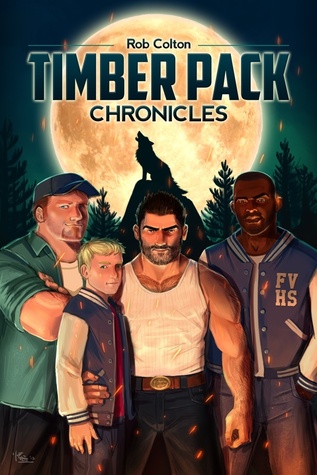
Timber Pack Chronicles by Rob Colton

20937536


Clan Beginnings Series by Tracy St-John

17159119

Favorites from the M/M Groups' Love’s Landscapes Event:

Stranded by Lies by Finn Marlowe (Based on my prompt!!!)


22779253

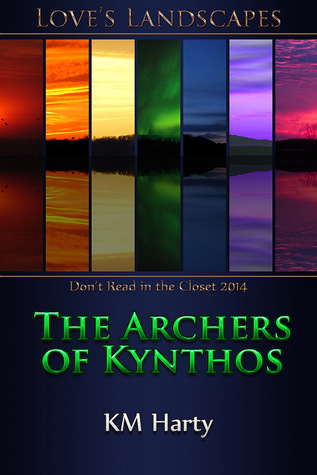
The Archers of Kynthos by K. M. Harty

22756165

Top Fan-fictions:

Clever Boy by TriggerTinks
21823595

Eat, Knot, Love by Pandabomb

22360633

Special mention for the works of KhouriArashi and Goldenpetal13’s Dreams and Nightmares series.


Top Read of the Year:

Clever Boy by Triggertinks


No real competition on this one. Of everything I read in the past year, this story left the deepest mark. To quote my lengthy Goodreads review: "I think it's the best Stockholm story I've ever read, disturbing, insightful, at times sexually charged, at times unbearably sad, pulling no punches about the psychic "erosion" taking place, but also never indulging in gratuitous vilification."  I wish I could issue a blanket recommendation to read it, but as I note in my review, “the tale of how a sixteen year old comes to bond with his psychopathic kidnapper is not for everyone.”


This was also the story that finally laid to rest my ridiculous prejudices against fanfiction. Far from being stupid or lacking, fanfiction is vital, experimental, crazy, and infinitely variable. Thinking about it, reading it, and finally writing it has deepened my understanding of the changes fiction is undergoing right now. Most of all it's incredibly enjoyable, not least because I have been able to share it with my fellow “Sterek Fanfic Freaks” on Goodreads.


A few final notes: 

I did not include any of the fanfictions by authors who had their work pulled from Goodreads, though several of them would probably have made it otherwise. While I am trying to not to be too judgmental about why they felt impelled to take such a step, the bottom line is that their actions hit my particular online community very hard. I personally had more than a dozen reviews deleted, along with my reading logs, favorite quotes and comments on my own and other reader’s reviews. Altogether my friends lost hundreds of reviews and discussions. It sounds trivial to outsiders when I try to explain it, but anyone involved knows that this ended being up an incredibly painful situation for the Goodreads fanfiction community.

The end-of-year wrap up appears to be my time to say a few inadequate thank yous, and once again, I want to express at least a small part of my gratitude to the friends I have made on Goodreads and to the site itself. It has its flaws, but the site does its main job amazingly well: making it possible for people all over the world to come together to celebrate and discuss their reading—any reading that strikes them as worth discussing, whether formally published or not. But the site has always only been as good as its members, dependent on their willingness to spend their time reading, reviewing, recommending and trading opinions about books. Like many of my friends on the site, I have no one in my “real life” who shares my literary obsessions, whether with dark erotica, M/M, or Sterek fanfiction. Without Goodreads, my reading life would be a lonely and impoverished thing, instead of the endlessly fascinating, informative, creative, lunatic, and just plain fun universe it has become. For that I am endlessly grateful.

Saturday, December 13, 2014

Is there a difference between “Non-con” and “Rape”?

If you read a lot of “non-con” romance, you will inevitably run across angry reviews making some version of the argument, “rape is rape.”

I associate the phrase “rape is rape” with the efforts to raise consciousness of date rape during the late 1980s and ‘90s. For people born before the sexual revolution, "rape" was something that involved a stranger with a gun in a poorly lit parking garage. Especially after the taboos against premarital sex were lifted, it became clear that the vast majority of rapes are “acquaintance rapes” where the parties are known to each other, and the most complex—i.e. hard to prosecute--of those cases take place between people who are romantically involved. Within that context, the phrase served as a crucial reminder that just because you dated or kissed or got drunk does not give your date the right to ignore your refusal to have sex.

And I understand that books that “blur the lines” over consent—romanticize what in real life is a crime, contribute to the myth that a woman who says “no” really means “yes,” that experiencing sexual release somehow negates the violation of will, and so on—would be infuriating to many people. From this point of view, calling these stories “non-con” is a dangerous whitewash.

I agree with these arguments—up to a point. It is absolutely crucial that everyone understand the importance of consent in sexuality, that we refute rationalizations that offer to excuse abusive, illegal behavior, that we empower all people to make healthy, conscious choices about their sexual relations. However, I consider accomplishing these real world ends to be something quite separate from, and not in any way incompatible with, the activity of reading romance novels that feature non-consent

Obviously, I am coming at this from the perspective of a woman who both reads and writes “non-con,” so I won’t pretend to objectivity, but I would like to lay out why I think the distinction between “non-con” and “rape” is both justified and necessary.

A lot of women, myself included, have what are commonly call “rape fantasies”—fantasies of being forced, helpless, humiliated, with varying degrees of violence. I have my own theories of why this may be, but they’re not based on any research, so they don’t have any more authority than anyone else’s. I do know that I have had these fantasies since before I was old enough to recognize them as sexual (for example, a childhood fascination with being kidnapped—I used to pretend my Sunshine Family dolls had been subject to a home invasion in their dollhouse) and that I do not have any trauma or abuse in my past that would offer up a “pathological” reason for why I have these fantasies.

I am also a die-hard liberal progressive, so I felt deeply ashamed and guilty about my fantasies for many years, until I hit my forties and finally said “WTF.”

For me, the distinction between “non-con” and “rape” is all-important. “Rape” simply cannot be a fantasy. Rape is my worst nightmare. It is the perversion of my most intimate fantasies into a tool to degrade, brutalize and damage me. It is turning me into the object of my enemy’s fantasy, one in which I am worthless, where my pain and humiliation serve to titillate someone else, where my feelings don’t matter. We hear pretty often the saying that “rape is a crime of violence not sex,” and that seems to me exactly right. It is an act of cruelty that seeks to violate the will and destroy the personhood of the victim.

“Non-con” fantasies are often treated as crude jerk-off fare, but my own experience is that they are quite complex, with deep roots in the inhibitions, sexual fear, guilt and shame that throughout most of history have been foisted on women and their relationship to their own desire. But whatever their origin, again from my own perspective, the defining condition of anything called an “erotic fantasy,” whether non-con or not, is that it must have pleasure and fulfillment as its ultimate goal. Moreover, within our fantasies, the loss of control is of course completely imaginary: there is no violation of will. No matter how violent the fantasy, the “victim” is always in control. In a very real way, what happens in the fantasy is simply not rape.

Insofar as romance novels are vehicles and expressions of these fantasies, I would argue the same rules apply. The fact that sometimes these depictions are brutal or violent doesn’t change that their goal is pleasure. And I can say as a reader, romance depictions of non-consensual sex do not feel the same as fictional depictions of the kind of “rape” I described above: the first is erotic and the second is horrifying.

Obviously, how a reader perceives a given scene is incredibly variable. Many readers are deeply disturbed by them, and unquestionably survivors of rape can find them traumatic, which is why content warnings are so important. But assuming there are safeguards to protect readers who don’t want to read books with non-con elements, I think it’s a very real question whether indulging in “non-con” fantasies causes greater harm either to the women who like them or to society at large—and by “real question,” I mean there are good arguments on either side and no real all-knowing authority who can inform us of the absolute truth. (And this doesn’t address the problem that I think there are plausible arguments in favor of regarding female fantasies about being “raped” as different and less harmful than male fantasies of raping someone else).

But as regards the question of damage, I would like to make two interrelated points. First, our society has a very old, very ugly history of condemning women for having “improper” sexual fantasies. In my own experience, women are at least as guilty of shaming other women for having the “wrong” fantasies as men are, and that impulse to condemn seems to spring as readily from the political left as it does the right. Ironically, as a sexually active teenager in the 1980s, I was able to dismiss my mother’s dire warnings that people would label me a “slut,” but I thoroughly internalized the often vitriolic feminist condemnation of women who indulged in disempowering, “retrograde” fantasies.

Bottom line: If we are going to argue the damage caused by female consumption of fictional “rape fantasies” then it’s only fair that we weigh that against the harm done by shaming and condemning women for their fantasies. (And, to risk another parenthetical, there is also the problem that shame and repression can make it difficult for some women to own their desires and communicate them clearly to their partners, which can in and of itself lead to destructive sexual encounters including rape.)

My second point is that the “rape is rape” argument negates the difference between fantasy and real life in way that seems to me utterly unhelpful and self-defeating. What we need is a better understanding of “rape fantasies” and why they are so different from the real-world crime of rape.

A few facts come to mind; as in fantasy, fiction is ultimately under the control of the author. She can know the true motives and desires of her characters, can state for certain what harms them and what doesn’t. In a novel, a scene of forced seduction can be credibly played as one character forcing through the unhealthy social repressions and inhibitions of another character for the simple reason that the author says they do—it’s within the parameters of the world the author is creating.

That knowledge is, essentially, magic. It does not exist in real life. There can be no scenario where a man can confidently dismiss a woman’s consent because he “knows” what she “really wants.” It is impossible to know for certain how a person can be helped or harmed by a given action. Violating the will of another person based on your own interpretation of their internal life is criminal—and delusional.

I would argue that we need to reinforce for both men and women why fantasy and fiction are fundamentally different than reality, just as we reinforce for our children that much as we love superheroes, those powers don’t and will never exist in real life.

I’ll just finish by saying that every woman I’ve ever met, whether she has been a victim or not, has to deal with the reality of rape. The fear is so ubiquitous and longstanding that most days we don't consciously register the million ways it influences our most basic decisions--over how we dress, whether we can travel, or even go to the store at 1am. I have no choice but to live with that fear, since even if I refuse to act on it, it has already shaped my instincts to the extent that I use words like "reality" to characterize it.

It makes me furious when I think about it, until that anger can feel like yet another assault on my freedom.  So I am all the more intent on not ceding this most precious, private space—the space my fantasies occupy. I want a way to talk about these fantasies and explore them that does not automatically cede the parameters to my enemies, those who hurt women in such an appalling, intimate way. They should not have the final say—that rape is always rape. 

Tuesday, October 28, 2014

R.I.P.


What follows is sad, about the death of my dog, Pip, on October 16. I didn’t post anything earlier because honestly I couldn’t bear it. I pretended I was fine and threw myself into finalizing my new book for upload. It helped while it lasted, but that’s over now, and I realized I was kidding myself.

I wrote this because my younger son was worried about me and thought it might help to write something. He liked the idea of paying tribute to Pip. So here it is: for my beloved dog who died, and for my family, and really for anyone who has ever maxed out a credit card trying to save a dying pet, or ordered a burial plot in that first rush of grief, or had to face this thing which was simply fucking unbearable.


I got the call at Comic-con. It was October 9, a Thursday,  the first day of the Jewish holiday Sukkot so my son had the day off from school. He and his friend and 50,000 people were packed into the Javitz Center. I could barely hear the vet over the noise of cosplaying nerds, but the news somehow came through with stunning, terrifying clarity.

I’d taken Pip in the day before because he wasn’t eating and didn’t have the energy for his usual walk. He’d lost weight but there wasn’t anything obvious. They’d done some blood work and she was calling to give me the results.

I hate when people say things like this, because it sounds phony and egotistical, but it’s true all the same: there are times when I really, really hate that I am good at reading between the lines of what people are saying to me, that I tend to listen to subtext instead of text. My mother died of lung cancer in 1997. She was 54. I mention it because during the six months between her diagnosis and her death, I got a lot of practice listening for what the doctors were really saying. Their actual words don’t mean much—medical jargon that they know their patients don’t understand but they share anyway because they’re humoring you, or they’re trying to cover their asses, or because they think it gives you some illusion of control, something to focus on. They’re human and they don’t like giving bad news, but I got good at hearing what they were really saying, at their techniques for blunting unbearable truths.

I got the refresher course with Pip. I knew with that first call, the one at Comic-con, that it was hopeless. That my dog was dying. The vet, who was wonderful, talked vaguely about 4-6 months, which I immediately translated to 4-6 weeks. She knew he was very loved, and I honestly think she and her staff fell in love with him a little too. She didn’t want to give up hope. I refused to go on the internet like my husband did or look up anything about canine Leukemia. I made no effort to keep track of details about platelet counts or white blood cells. But every time we talked, that number got revised down like I knew it would, though I hated myself for being right.

We adopted Pip from a no-kill shelter as a puppy on October 10, 2009. That’s me holding him as we drove home for the first time:


We called him a corgeranian—for corgi-pomeranian—but that was just a guess. I picked the name, from Great Expectations, and it really did fit his personality. He was incredibly cheerful and playful. He liked to lounge on his back in the hallway, wagging his tail at anyone who walked by, hoping they’d rub his stomach. He didn’t like closed doors. Every time I went to the bathroom, he nosed the door open and went to lie down at a favorite spot underneath the sink. His fur was incredibly soft for a dog. He looked like he was wearing eyeliner and had a really fluffy tail that little kids especially loved. I read once that corgis with his coloring are described as “red.” We all thought he looked a little like a fox. I didn’t want to post personal stuff about my kids so I posted pictures of him pretty often. My husband loves photography, so we have thousands of him. This is a good shot I've posted before of him as a full-grown dog.


In the end, it wasn’t four months, or four weeks. It was one week. The following Thursday was another Jewish holiday, Simchat Torah, so my younger son was off from school again. It felt a little like a TV show when the phone rang around 9am. A kind voice that told you everything you needed to know, even without the actual words, “Could you come down to the hospital to talk to us about how to proceed.”

My husband couldn’t bear to go. I promised my younger son I’d say goodbye to Pip for him. I sent an email to my older son’s adviser at his boarding school warning that this was coming, because we all knew he was going to have an impossibly hard time with this. He was passionately fond of the dog, and idiotically, unforgivably, we’d held off from telling him how sick Pip was because we didn’t want him to worry helplessly, and we’d been thinking in terms of a few weeks or months, not seven days.

I drove to the hospital, took five minutes just to hold him, whisper goodbye from everyone, and the incredibly kind doctor did it.

I couldn’t get hold of my older son until that afternoon. After the first crash of the news, he just sobbed into the phone, “I don’t know what to do,” over and over again. It was exactly how I’d felt when I got home from Comic-con the week before. I think it was the hardest moment I’ve had in my 16 years as a parent.

I haven’t put his bowl or his bed away, though I threw away the six different meds he’d been prescribed. I tried not to be angry at them for not working. I keep hearing sounds that should be him but aren’t, like he’s a little ghost curled up in his favorite spots. On Thursday, I had to tell his friend, Jerry, at the Farmer’s Market why Pip wasn’t with me to dump our compost. He cried a little. Pip was a favorite in the neighborhood.

I can’t seem to read anything but Teen Wolf fanfics right now. I felt bad because a lot of my friends had books come out this month, amazing books that I was really excited about. But the Sterek helps so I’m sticking with it for now, some kind of fictional comfort food.

This is it, my tribute, and once it's up I'm going to have another cry and I'm not going to write anything sad again. Later tonight when I post something funny or filthy about Sterek, it won't be fake, it just won't be everything. 

At different points both my sons confessed that they felt guilty that they’d not always paid enough attention to Pip, not played with him as much as they could have. I thought that too of course. And I told myself what I told them: if ever there was a happy dog it was Pip. And horrible as this is, and it is really and truly fucking horrible, I am incredibly grateful for the five years we had with him, and I wouldn’t have given it up for anything.