Saturday, February 28, 2015

Googled

So like a lot of my fellow Google Blogger users, I received a notice a few days ago informing me of the following:

In the coming weeks, we'll no longer allow blogs that contain sexually explicit or graphic nude images or video. We'll still allow nudity presented in artistic, educational, documentary, or scientific contexts, or where there are other substantial benefits to the public from not taking action on the content.

The new policy will go into effect on the 23rd of March 2015. After this policy goes into effect, Google will restrict access to any blog identified as being in violation of our revised policy. No content will be deleted, but only blog authors and those with whom they have expressly shared the blog will be able to see the content we've made private.

Our records indicate that your account may be affected by this policy change. Please refrain from creating new content that would violate this policy. Also, we ask that you make any necessary changes to your existing blog to comply as soon as possible, so that you won't experience any interruptions in service.

I got the notice because my blog is labeled for adult content, which makes sense since I mostly write about erotica, though in fact I didn't actually have any “nude images” on my blog (I kind of wish now that I did). Needless to say, I was extremely pissed off about this abrupt change in policy, which came out of nowhere, created havoc for a lot of friends of mine, and represents the kind of narrow-minded, censorious Puritanism that goes against everything my blog stands for.

Apparently, I was not the only unhappy person, since this morning Google retracted their new policy—to which I can only say, WTF? Yeah, it’s good I guess, but since I spent more than six hours yesterday moving my posts over to my web site, at the moment I am feeling more frustrated than grateful.

So, the upshot of this, is that I have decided to go ahead and move my blog. Overall, it’s probably best for that all important “Lilia Ford Brand” that I have everything in one location, but I confess that I will miss Blogger, which I’ve used since 2007 and still regard as one of the most accessible, user-friendly platforms out there. Annoyingly, the move itself has proven to be a total migraine. Unlike reposting to booklikes or tumblr, it is not possible to move blog posts wholesale to my website host with images and links intact. To make it a bit easier, I’ve had to make the following compromises.
  1. I am only moving significant essays and book reviews, not announcements or short pieces.
  2. In order to spare myself hours of labor, I am not going back and replacing every single link. I have tried to put in links to major quotes and references, but I am not putting in things like Amazon buy links to books being reviewed.
  3. Therefore, I will be leaving the original blog up, both to preserve the original versions with all links included and also for those (probably rare) cases where others have linked to my posts.
After this post, new posts will only appear there, and where possible I will replace any links I find to refer back to the website rather than to Blogger. Goodreads has assured me that previous posts and comments appearing on their site will not be affected, so I am hopeful that nothing will change there.

I admit that I am really angry and disgusted that Google of all companies would even contemplate a policy like this given the disproportionate influence it has on how information is disseminated in our society: That they would take a step that expresses such strong disapproval for the open treatment of human sexuality, that moves away from a position of strict neutrality on what should and should not be discussed in the blogosphere, and go so far as to threaten their own customers with complete removal from the public sphere if they don’t censor material, some of which has been up for a decade or more.

Bottom line: I’m glad they retracted, but the damage has been done.


Here is the link to the new blog:
http://www.liliafordromance.com/#!blog/c1xx

Friday, February 13, 2015

Goodreads Reviews: Ilona Andrews' On the Edge


Series Review:
I can't say I have a favorite volume of this series: I've read and reread all four several times, and somehow get that same glorious rush each time. Paranormals are a dime a dozen these days, but none are quite like this. The entire concept of the Edge is so imaginative, with limitless possibilities for cool plotlines.

I especially love the series' emphasis on family. Children are major characters in each book, and they are not there just to be adorable, play matchmaker, or dispense improbably wise bits of relationship advice. Rather, they have their own agendas, personal histories, and magical powers. Jack Drayton may be my favorite child in any (adult) book, but all of the children in these books are realistically drawn and compelling characters in their own right.

I'll also put in a special word of praise for how On the Edge handles the rich guy/poor girl plotline. Now as a romance junky, I'm all for stories about princes in their palaces or billionaires in their penthouse apartments. However, in recent years, we’ve seen the rise of what I’ll call the Supply-Side Cinderella: these Republican-friendly stories like Twilight and Fifty Shades of Grey cross the line from fun descriptions of luxury to celebrating wealth and wealthy people. In books of this ilk, rich people are fundamentally better--classier, smarter, cooler, better--than people who don’t have money, and the heroine, CinderAnaBella, deserves to share that money because she is more authentic and sensitive and appreciative than her more conventional friends, (who belong with the working-class stiffs they end up with.) You don't have to be a Bolshevik to find loathsome the implication that the uber-wealthy deserve their good fortune thanks to their superior virtues, and that those less fortunate are exactly where they belong.

Superficially On the Edge is similar: the heroine, Rose, works a dead-end job for a cleaning service and is wooed by super-handsome aristocrat, Declan. But unlike in the Supply-Side Cinderella stories, both the poverty of the Edge and the aristocratic wealth of the Weird are treated with the same clear-eyed lack of sentiment and glamor. Rose's struggles to pay for shoes or gasoline are shown for the soul-sucking grind they are. Declan is basically a good guy, but it is mostly in spite of his class not because of it. Most importantly, though I was incredibly happy to see Rose and her brothers rescued from such a hopeless situation, I never doubted Declan was damn lucky to win her.

Bottom line: this is one of my absolute favorite paranormal series. All four books are excellent. My only complaint is that I want more. Are we ever going to get Jack, George’s and Lark’s stories? Because I’m totally willing to beg.


Originally posted on Goodreads.

Monday, February 2, 2015

New Release: Teen Wolf Fanfiction


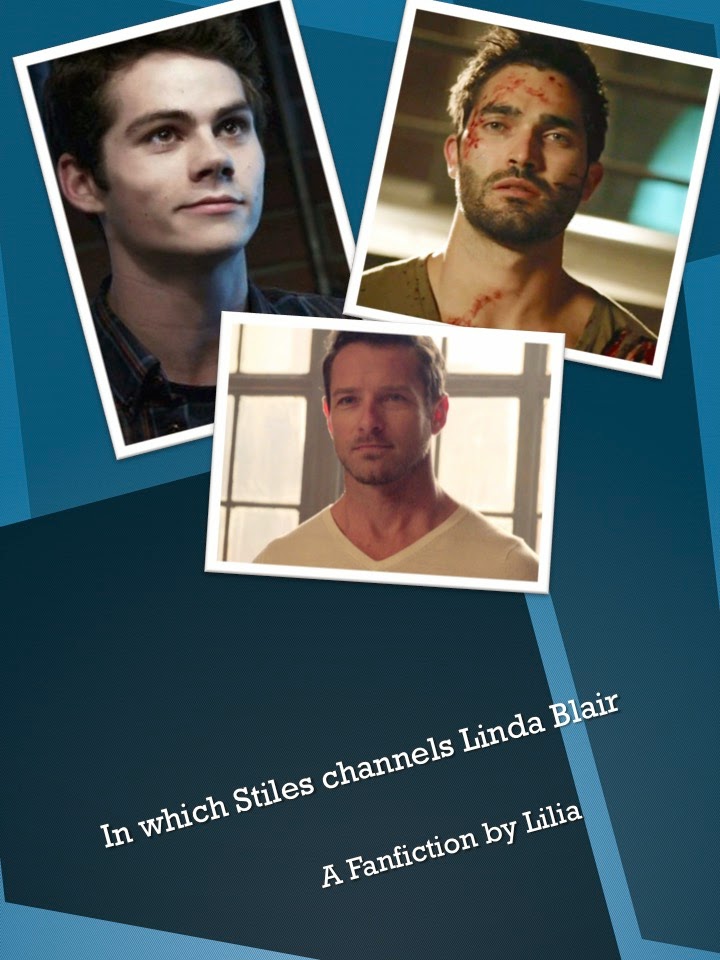
For reasons that my therapist and I have failed to adequately elucidate, back in November I was suddenly gripped by an overpowering compulsion to write my own Teen Wolf fan-fiction. In fact I wrote two. The first is a short PWP (porn without plot) Steterek (Stiles, Derek and Peter). Not too much to say about it except that it’s completely filthy, set in the omegaverse (see below), and bears the title, “In Which Stiles Channels Linda Blair.” It should take less than fifteen minutes to read. Here's my (homemade) cover for it:


The second story, entitled Mating Bite, was much more ambitious, with a final word count of 24,200, making it the third longest piece I’ve published. Though I immensely enjoyed writing it, the experience did convince me that my own personal muse is in fact an incarnation of Teen Wolf’s sex-bomb, Erica Reyes, who most likely suffers from a (mild?) case of oppositional/defiant disorder.


This less-than-sympathetic personage refused to inspire anything as straightforward as a Sterek or Steter but rather mocked me with a story featuring the "rare pairing" of “Jisaac,” aka “Jackson Whittemore /Isaac Lahey.” Luckily for me, she was generous enough to set that story in the “omegaverse,” which I’d been dying to write about since I first discovered it in a Supernatural fanfic.

For those who are new to fanfiction, the ‘omegaverse’ is the term for a world where all humans are born into one of three “classifications,” Alpha, Beta, or Omega, and generally possess traits more or less ascribed to (were)wolves. I’m going to squelch my instinct to say something mocking about it because the solemn truth is that omegaverse fanfics are among my favorites.

Now many omegaverse stories represent the ne plus ultra of porntastic filth, complete with heats and especially knotting, which (needless to say) I’m all for. But as Foz Meadows' brilliant essay, Thoughts on Fanfiction, recently argued, the omegaverse is a large one, offering writers across diverse fandoms a framework to explore issues related to fantasy, identity and politics. My favorite stories in the genre deal with a lot of the issues closest to my heart, including the tension between fantasies of sexual submission and the fight for real-world autonomy and rights for women and other historically disempowered people. Meadows puts it far better than I can:
Given the steady popularity of historical romance novels, whose female characters struggle to autonomously navigate love and marriage despite their lack of legal, social and sexual protection, it shouldn’t be so surprising that omegaverse stories reflect a similar tension/dialogue between submission and activism in a context where the one is simplistically taken to negate the other. Nonetheless, there’s a compelling paradox in the idea that omegaverse fics are just as likely to condemn such violent oppressions as to explore them in the context of kink or sexual fantasy, while the fact that both elements might be simultaneously – and deliberately – present within the same narrative is a testament to fanfiction’s versatility.
I wish I could quote more, but I'll just have to urge people to carve out the (not insignificant amount of) time to read the whole essay, which I especially recommend to anyone interested in fanfiction, which should be anyone interested in the changes in contemporary publishing. (And while I'm here, I'll also recommend her equally insightful essay, Teen Wolf: Subversion, Masculinity, and Gender.)

I can’t make grandiose claims for the politics in my own story, but it does deal with five high school omegas who have formed an activist group, Omega Rights Today, and are trying to balance their own dreams for college and careers with the intense social pressure to find Alpha mates as well as their own longings for sex and love.

So without further ado, I present Mating Bite, a Jisaac fanfiction, currently available on Archive of Our Own.

Here is the blurb:

Seven years ago, Jackson Whittemore forced an Alpha mating bite on eleven-year-old omega Isaac Lahey. As punishment, he was banished from Beacon Hills until they both came of age. In the meantime, Isaac has become best friends with Stiles Stilinski and helped him found the high school activist group, Omega Rights Today. But having finally turned eighteen, Isaac knows that Jackson will be coming for him.

Those accustomed to my lengthy, detailed content warnings may be surprised to learn that this story requires less in that department than anything else I’ve ever published. Here it is: it’s M/M and it’s explicit, but otherwise there’s only one sex scene, not much in the way of kink, and no consent issues.

And in case you were wondering why you should hire professionals to make your book covers, here is the one I manage to make on Powerpoint:


Finally, as part of my Teen Wolf craze I've been spending a tiny bit of time (all right, hours and hours!) pinning and posting images on Pinterest and Tumblr, and came up with the brilliant idea of creating an "illustrated" version of each chapter of Mating Bite.  Here's a small sample of the pictures you'll find there:


Need I say more? 


Friday, January 30, 2015

Best of 2014: Think of England by KJ Charles

Best Historical and Most Admired Book:


Another winner. Charles nails the Christie-esque "mystery/house party" set up, though this is an oddly dark story about some truly ugly people. I loved both leads--I want to say especially Daniel, who felt both recognizable and also really original, but I thought Archie was wonderful too. To an unusual degree, each man illuminates the other on a fundamental level. They are very different but neither is as fully realized, romantically or thematically, without the other.

You see this in Archie's very funny but also poignant attempts at confronting Daniel's "Fragmentalist" verse (which doesn't even rhyme properly!) Everything to do with Daniel's poetry was surprisingly multilayered and revealing.
There were vivid images, but they were extraordinary ones, not poetic at all in the way Curtis vaguely felt poetry should be, with trumpets or mountains or daffodils. These poems were full of broken glass and water-which was not clean water-and scaly things that moved in the dark.
The contrast between the Wordsworthian daffodils and scaly things in (not clean!) water was priceless. The part where Archie stops the other men from mocking Daniel's verse was one of those quiet moments of true heroism that really defines Archie's character. And in truth, his attempts to make sense of modern verse like Daniel's can serve as a stand-in for the experiences of a generation of people who could no longer exist within the comforting moral certitudes of the previous century.

And then of course, there's Daniel, whose religion, class background, and sexuality mean that he saw through those illusions and empty certitudes--probably starting when he was about four years old. (It's a brilliant, potent touch that he's the son of a locksmith). He's a great picture of the kind of mind and perspective that brought us Modernism, but the frequent references to suicide in the story remind us how lonely and wretched that alienation could sometimes be. It's refreshing and heartening to find that character occupying the main role in an old-fashioned romance, with heroic rescues, love and, of course, happy-ever-afters.

I'm teasing out a few of these themes because I used to teach this subject, but I don't want to imply that there is anything ponderous or pretentious in the literary allusions. They're built into the characters and plot in the most natural, understated way.

There's plenty more I would like to praise here, but I'll ring off. Bottom line: this is a home run. Read it. It's great.

5 Stars

Review originally posted on Goodreads.

Tuesday, January 20, 2015

Best of 2014: Mark Cooper Versus America


19549885

Blurb:

Mark Cooper is angry, homesick, and about to take his stepdad’s dubious advice and rush Prescott College’s biggest party fraternity, Alpha Delta Phi. Greek life is as foreign to Aussie transplant Mark as Pennsylvania’s snowstorms and bear sightings. So, when the fraternity extends Mark a bid, Mark vows to get himself kicked out by the end of pledge period. But then he’s drawn into Alpha Delt’s feud with a neighboring fraternity.

Studious Deacon Holt is disappointed to learn Mark’s pledging Alpha Delt, his fraternity Phi Sigma Kappa’s sworn enemy. Mark is too beautiful for Deacon to pass up an invitation for sex, but beyond sex, Deacon’s not sure. He wants a relationship, but a difficult family situation prevents him from pursuing anything beyond his studies.

Mark and Deacon’s affair heats up as the war between their fraternities escalates. They explore kinks they didn’t know they had while keeping their liaison a secret from their brothers. But what Romeo and Juliet didn’t teach these star-crossed lovers is how to move beyond sex and into a place where they share more than a bed. That’s something they’ll have to figure out on their own—if the friction between their houses, and between Mark and America, doesn’t tear them apart.


Review:

Fantastic. I’ll admit to being nervous because I am emphatically not a fan of raunchy, R-rated American Frat comedies. There were moments, especially in the early chapters, when the authors skirted perilously close to cliché in the portrayal of Alpha Delta. But as we grow to understand, 90% of the problem is that the boys themselves have seen too many of those movies and seem intent on living up to their very questionable ideas of fun. But thanks to the authors’ overall self-consciousness, especially the clever allusions to Romeo and Juliet, the book deploys and then undermines the usual frat, excuse me Fraternity, clichés, creating a tender, insightful story about growing up, finding your place, and falling in love.

With Mark himself, the authors manage the almost miraculous balancing act of creating a character who struck me as being at once the epitome of the modern, disaffected teen and also wholly fresh and original. Crucial to this was the avoidance of the usual YA-friendly explanations for Mark’s behavior--a horrible step father, a neglectful mother, some early trauma--in favor something far more subtle and unexpected. Their restraint made Mark feel unusually real. In a lot of ways, Mark rebels because he doesn't have much to rebel against. He aggressively redefines his world to fit his need to lash out. This is a quality that we and Deacon discover gradually over time through dozens of small touches, instead of having it shoved down our throats in some tearful monologue.

All of this is good, but what made the book truly a pleasure to read was the writing. Though all of their books have been great, I think the Rock/Henry collaboration really comes into its own in Mark Cooper versus America. The narration is tight and energetic and perfectly infused with the highly distinctive idiom and mentality of its two MCs. I marked dozens of memorable, witty passages and phrases that just made me happy in the way that only terrific writing can:

The fraternity thing was just the latest idea out of Jim’s Top One Hundred Ways to Get Mark a Friend or Die Trying. Copyright Jim, 2013.

Angry bunny.

The guy, drunk, stumbled and went face-first into a bale of hay.
Everyone cheered. It was that sort of party.

At what point in your life did you decide you were the sort of guy who wanted to be fisted?
And never forgetting Mark's war with the local coffee shop over his inalienable right to order a "flat white" instead of a latte.

(Which he apparently won, if we're to believe this poster currently up in my local Starbucks:
Certain Australian authors are loudly cheering.)

But even more than the comedy, there were the moments of insight that made me know and care about these characters:

It was fine to be mocked or disliked on his own terms. But his sexual orientation was such a naked target, unfortified by nonchalance and lacking the benefit of being a persona he’d constructed. Gay Mark wasn’t sheddable like Smart-Ass Mark or Bitter-About-the-Move Mark.

Deacon smiled. He was pretty sure he was just the latest in a long line of people who had no idea what Mark Cooper was thinking.

Given that in many ways this book is the “Mark Circus,” I was gratified that I found Deacon as rich and compelling a character in his quieter way. Part of the strength of the book is that neither Deacon nor Mark could be fully realized without the other. Only Deacon recognizes the vulnerable young man beneath Mark’s smart-ass demeanor. On the flip side, Mark enables Deacon to cut loose and actually have fun. On a deeper level, Deacon is someone who needs to take care of others, and with Mark he’s finally able to do so in a way that is mutual and fulfilling instead of draining and self-sacrificing.

Perhaps the most unexpected thought I had reading the book was that this was the best YA novel I’ve read in ages. That reaction created a mini-existential crisis because a rebellious part of me, the part who remembers what it was like to be a teenager, really wants to make the argument for why this book is healthier, truer, and just plain better than most of the crap directed at teens. Depressingly, the more conventional, timid, mother-of-a-teen part of me is not quite ready to recommend a book which heavily features fisting and other kink for the under twenty crowd. My hesitations feel all the more craven and pathetic given that I know for a fact (yes, I do know how to check the google search history) that my son and his friends already watch really explicit, rasty stuff online.

I won’t solve this today, but if anyone reading this decides to nominate this book for YA Book of the Year, you have my vote. In the meantime enjoy Mark et al. You’re in for a real treat.

Rating: Five Stars


(Originally posted on Goodreads: Link to Amazon)

Wednesday, January 14, 2015

Favorite Reads of 2014


A little late this year, but once again the time has come to write up my list of top reads of the year. As always, it is a list of books I read in 2014, not those published this year.

Even more than previous years, the list leans on the personal, as in books that are personally important to me, not those I am arguing should be important to anyone else. The more I do this, the more I have to acknowledge that some books get inside me—I remember them and reread them in large part because they complement and build on the stories that I tell in my own head. Some are beautifully-written books that I’d recommend to anyone. But some of them are very rough, minimally edited or with glaring issues, that for whatever reason just hit a vital chord, emotional or psychological or erotic, and for that reason became permanent fixtures in my brain’s landscape.

No doubt this is all the more obvious because 2014 became the year of fanfiction, specifically Teen Wolf. I’ve read almost nothing else since September. I’ll not bother here to defend it to non-believers, but hopefully over the coming months I’ll post a few reviews that lay out why I think fanfiction itself is important and worthy of respect and attention.

Finally, I have reviewed most of these already on Goodreads. Check my shelf for "Favorite Reads 2014" for the individual titles. 

So, drumroll, please. Lilia's Top Reads of 2014.

Top Historical and Most Admired Book: 

Think of England by K. J. Charles

20822874


Top Contemporary and Just Makes Me Glad I’m Alive:

Mark Cooper versus America by Lisa Henry and J. A. Rock

19549885

Top Read for the Feelz:

Ethan Who Loved Carter by Ryan Loveless

15833525


Favorite Fantasy Series:

 Invisible Chains and  Invisible Hands (Dark Tales of Randamor the Recluse) by Andrew Ashling

13606562


Seriously the Best Sci-Fi Series Ever and Among my Top Lifetime Reads of Any Genre:

Vorkosigan Saga by Lois McMaster Bujold with special mention for the opening book, Shards of Honor


Top Reads for Sheer Porntastic Enjoyment:

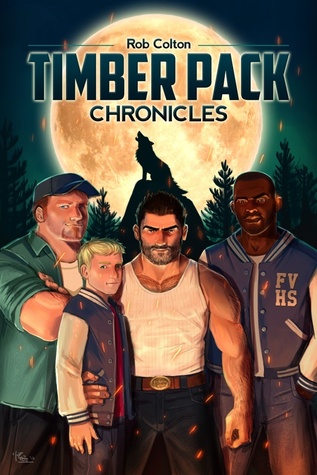
Timber Pack Chronicles by Rob Colton

20937536


Clan Beginnings Series by Tracy St-John

17159119

Favorites from the M/M Groups' Love’s Landscapes Event:

Stranded by Lies by Finn Marlowe (Based on my prompt!!!)


22779253

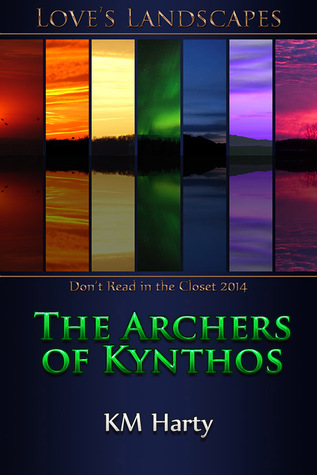
The Archers of Kynthos by K. M. Harty

22756165

Top Fan-fictions:

Clever Boy by TriggerTinks
21823595

Eat, Knot, Love by Pandabomb

22360633

Special mention for the works of KhouriArashi and Goldenpetal13’s Dreams and Nightmares series.


Top Read of the Year:

Clever Boy by Triggertinks


No real competition on this one. Of everything I read in the past year, this story left the deepest mark. To quote my lengthy Goodreads review: "I think it's the best Stockholm story I've ever read, disturbing, insightful, at times sexually charged, at times unbearably sad, pulling no punches about the psychic "erosion" taking place, but also never indulging in gratuitous vilification."  I wish I could issue a blanket recommendation to read it, but as I note in my review, “the tale of how a sixteen year old comes to bond with his psychopathic kidnapper is not for everyone.”


This was also the story that finally laid to rest my ridiculous prejudices against fanfiction. Far from being stupid or lacking, fanfiction is vital, experimental, crazy, and infinitely variable. Thinking about it, reading it, and finally writing it has deepened my understanding of the changes fiction is undergoing right now. Most of all it's incredibly enjoyable, not least because I have been able to share it with my fellow “Sterek Fanfic Freaks” on Goodreads.


A few final notes: 

I did not include any of the fanfictions by authors who had their work pulled from Goodreads, though several of them would probably have made it otherwise. While I am trying to not to be too judgmental about why they felt impelled to take such a step, the bottom line is that their actions hit my particular online community very hard. I personally had more than a dozen reviews deleted, along with my reading logs, favorite quotes and comments on my own and other reader’s reviews. Altogether my friends lost hundreds of reviews and discussions. It sounds trivial to outsiders when I try to explain it, but anyone involved knows that this ended being up an incredibly painful situation for the Goodreads fanfiction community.

The end-of-year wrap up appears to be my time to say a few inadequate thank yous, and once again, I want to express at least a small part of my gratitude to the friends I have made on Goodreads and to the site itself. It has its flaws, but the site does its main job amazingly well: making it possible for people all over the world to come together to celebrate and discuss their reading—any reading that strikes them as worth discussing, whether formally published or not. But the site has always only been as good as its members, dependent on their willingness to spend their time reading, reviewing, recommending and trading opinions about books. Like many of my friends on the site, I have no one in my “real life” who shares my literary obsessions, whether with dark erotica, M/M, or Sterek fanfiction. Without Goodreads, my reading life would be a lonely and impoverished thing, instead of the endlessly fascinating, informative, creative, lunatic, and just plain fun universe it has become. For that I am endlessly grateful.

Saturday, December 13, 2014

Is there a difference between “Non-con” and “Rape”?

If you read a lot of “non-con” romance, you will inevitably run across angry reviews making some version of the argument, “rape is rape.”

I associate the phrase “rape is rape” with the efforts to raise consciousness of date rape during the late 1980s and ‘90s. For people born before the sexual revolution, "rape" was something that involved a stranger with a gun in a poorly lit parking garage. Especially after the taboos against premarital sex were lifted, it became clear that the vast majority of rapes are “acquaintance rapes” where the parties are known to each other, and the most complex—i.e. hard to prosecute--of those cases take place between people who are romantically involved. Within that context, the phrase served as a crucial reminder that just because you dated or kissed or got drunk does not give your date the right to ignore your refusal to have sex.

And I understand that books that “blur the lines” over consent—romanticize what in real life is a crime, contribute to the myth that a woman who says “no” really means “yes,” that experiencing sexual release somehow negates the violation of will, and so on—would be infuriating to many people. From this point of view, calling these stories “non-con” is a dangerous whitewash.

I agree with these arguments—up to a point. It is absolutely crucial that everyone understand the importance of consent in sexuality, that we refute rationalizations that offer to excuse abusive, illegal behavior, that we empower all people to make healthy, conscious choices about their sexual relations. However, I consider accomplishing these real world ends to be something quite separate from, and not in any way incompatible with, the activity of reading romance novels that feature non-consent

Obviously, I am coming at this from the perspective of a woman who both reads and writes “non-con,” so I won’t pretend to objectivity, but I would like to lay out why I think the distinction between “non-con” and “rape” is both justified and necessary.

A lot of women, myself included, have what are commonly call “rape fantasies”—fantasies of being forced, helpless, humiliated, with varying degrees of violence. I have my own theories of why this may be, but they’re not based on any research, so they don’t have any more authority than anyone else’s. I do know that I have had these fantasies since before I was old enough to recognize them as sexual (for example, a childhood fascination with being kidnapped—I used to pretend my Sunshine Family dolls had been subject to a home invasion in their dollhouse) and that I do not have any trauma or abuse in my past that would offer up a “pathological” reason for why I have these fantasies.

I am also a die-hard liberal progressive, so I felt deeply ashamed and guilty about my fantasies for many years, until I hit my forties and finally said “WTF.”

For me, the distinction between “non-con” and “rape” is all-important. “Rape” simply cannot be a fantasy. Rape is my worst nightmare. It is the perversion of my most intimate fantasies into a tool to degrade, brutalize and damage me. It is turning me into the object of my enemy’s fantasy, one in which I am worthless, where my pain and humiliation serve to titillate someone else, where my feelings don’t matter. We hear pretty often the saying that “rape is a crime of violence not sex,” and that seems to me exactly right. It is an act of cruelty that seeks to violate the will and destroy the personhood of the victim.

“Non-con” fantasies are often treated as crude jerk-off fare, but my own experience is that they are quite complex, with deep roots in the inhibitions, sexual fear, guilt and shame that throughout most of history have been foisted on women and their relationship to their own desire. But whatever their origin, again from my own perspective, the defining condition of anything called an “erotic fantasy,” whether non-con or not, is that it must have pleasure and fulfillment as its ultimate goal. Moreover, within our fantasies, the loss of control is of course completely imaginary: there is no violation of will. No matter how violent the fantasy, the “victim” is always in control. In a very real way, what happens in the fantasy is simply not rape.

Insofar as romance novels are vehicles and expressions of these fantasies, I would argue the same rules apply. The fact that sometimes these depictions are brutal or violent doesn’t change that their goal is pleasure. And I can say as a reader, romance depictions of non-consensual sex do not feel the same as fictional depictions of the kind of “rape” I described above: the first is erotic and the second is horrifying.

Obviously, how a reader perceives a given scene is incredibly variable. Many readers are deeply disturbed by them, and unquestionably survivors of rape can find them traumatic, which is why content warnings are so important. But assuming there are safeguards to protect readers who don’t want to read books with non-con elements, I think it’s a very real question whether indulging in “non-con” fantasies causes greater harm either to the women who like them or to society at large—and by “real question,” I mean there are good arguments on either side and no real all-knowing authority who can inform us of the absolute truth. (And this doesn’t address the problem that I think there are plausible arguments in favor of regarding female fantasies about being “raped” as different and less harmful than male fantasies of raping someone else).

But as regards the question of damage, I would like to make two interrelated points. First, our society has a very old, very ugly history of condemning women for having “improper” sexual fantasies. In my own experience, women are at least as guilty of shaming other women for having the “wrong” fantasies as men are, and that impulse to condemn seems to spring as readily from the political left as it does the right. Ironically, as a sexually active teenager in the 1980s, I was able to dismiss my mother’s dire warnings that people would label me a “slut,” but I thoroughly internalized the often vitriolic feminist condemnation of women who indulged in disempowering, “retrograde” fantasies.

Bottom line: If we are going to argue the damage caused by female consumption of fictional “rape fantasies” then it’s only fair that we weigh that against the harm done by shaming and condemning women for their fantasies. (And, to risk another parenthetical, there is also the problem that shame and repression can make it difficult for some women to own their desires and communicate them clearly to their partners, which can in and of itself lead to destructive sexual encounters including rape.)

My second point is that the “rape is rape” argument negates the difference between fantasy and real life in way that seems to me utterly unhelpful and self-defeating. What we need is a better understanding of “rape fantasies” and why they are so different from the real-world crime of rape.

A few facts come to mind; as in fantasy, fiction is ultimately under the control of the author. She can know the true motives and desires of her characters, can state for certain what harms them and what doesn’t. In a novel, a scene of forced seduction can be credibly played as one character forcing through the unhealthy social repressions and inhibitions of another character for the simple reason that the author says they do—it’s within the parameters of the world the author is creating.

That knowledge is, essentially, magic. It does not exist in real life. There can be no scenario where a man can confidently dismiss a woman’s consent because he “knows” what she “really wants.” It is impossible to know for certain how a person can be helped or harmed by a given action. Violating the will of another person based on your own interpretation of their internal life is criminal—and delusional.

I would argue that we need to reinforce for both men and women why fantasy and fiction are fundamentally different than reality, just as we reinforce for our children that much as we love superheroes, those powers don’t and will never exist in real life.

I’ll just finish by saying that every woman I’ve ever met, whether she has been a victim or not, has to deal with the reality of rape. The fear is so ubiquitous and longstanding that most days we don't consciously register the million ways it influences our most basic decisions--over how we dress, whether we can travel, or even go to the store at 1am. I have no choice but to live with that fear, since even if I refuse to act on it, it has already shaped my instincts to the extent that I use words like "reality" to characterize it.

It makes me furious when I think about it, until that anger can feel like yet another assault on my freedom.  So I am all the more intent on not ceding this most precious, private space—the space my fantasies occupy. I want a way to talk about these fantasies and explore them that does not automatically cede the parameters to my enemies, those who hurt women in such an appalling, intimate way. They should not have the final say—that rape is always rape. 

Tuesday, October 28, 2014

R.I.P.


What follows is sad, about the death of my dog, Pip, on October 16. I didn’t post anything earlier because honestly I couldn’t bear it. I pretended I was fine and threw myself into finalizing my new book for upload. It helped while it lasted, but that’s over now, and I realized I was kidding myself.

I wrote this because my younger son was worried about me and thought it might help to write something. He liked the idea of paying tribute to Pip. So here it is: for my beloved dog who died, and for my family, and really for anyone who has ever maxed out a credit card trying to save a dying pet, or ordered a burial plot in that first rush of grief, or had to face this thing which was simply fucking unbearable.


I got the call at Comic-con. It was October 9, a Thursday,  the first day of the Jewish holiday Sukkot so my son had the day off from school. He and his friend and 50,000 people were packed into the Javitz Center. I could barely hear the vet over the noise of cosplaying nerds, but the news somehow came through with stunning, terrifying clarity.

I’d taken Pip in the day before because he wasn’t eating and didn’t have the energy for his usual walk. He’d lost weight but there wasn’t anything obvious. They’d done some blood work and she was calling to give me the results.

I hate when people say things like this, because it sounds phony and egotistical, but it’s true all the same: there are times when I really, really hate that I am good at reading between the lines of what people are saying to me, that I tend to listen to subtext instead of text. My mother died of lung cancer in 1997. She was 54. I mention it because during the six months between her diagnosis and her death, I got a lot of practice listening for what the doctors were really saying. Their actual words don’t mean much—medical jargon that they know their patients don’t understand but they share anyway because they’re humoring you, or they’re trying to cover their asses, or because they think it gives you some illusion of control, something to focus on. They’re human and they don’t like giving bad news, but I got good at hearing what they were really saying, at their techniques for blunting unbearable truths.

I got the refresher course with Pip. I knew with that first call, the one at Comic-con, that it was hopeless. That my dog was dying. The vet, who was wonderful, talked vaguely about 4-6 months, which I immediately translated to 4-6 weeks. She knew he was very loved, and I honestly think she and her staff fell in love with him a little too. She didn’t want to give up hope. I refused to go on the internet like my husband did or look up anything about canine Leukemia. I made no effort to keep track of details about platelet counts or white blood cells. But every time we talked, that number got revised down like I knew it would, though I hated myself for being right.

We adopted Pip from a no-kill shelter as a puppy on October 10, 2009. That’s me holding him as we drove home for the first time:


We called him a corgeranian—for corgi-pomeranian—but that was just a guess. I picked the name, from Great Expectations, and it really did fit his personality. He was incredibly cheerful and playful. He liked to lounge on his back in the hallway, wagging his tail at anyone who walked by, hoping they’d rub his stomach. He didn’t like closed doors. Every time I went to the bathroom, he nosed the door open and went to lie down at a favorite spot underneath the sink. His fur was incredibly soft for a dog. He looked like he was wearing eyeliner and had a really fluffy tail that little kids especially loved. I read once that corgis with his coloring are described as “red.” We all thought he looked a little like a fox. I didn’t want to post personal stuff about my kids so I posted pictures of him pretty often. My husband loves photography, so we have thousands of him. This is a good shot I've posted before of him as a full-grown dog.


In the end, it wasn’t four months, or four weeks. It was one week. The following Thursday was another Jewish holiday, Simchat Torah, so my younger son was off from school again. It felt a little like a TV show when the phone rang around 9am. A kind voice that told you everything you needed to know, even without the actual words, “Could you come down to the hospital to talk to us about how to proceed.”

My husband couldn’t bear to go. I promised my younger son I’d say goodbye to Pip for him. I sent an email to my older son’s adviser at his boarding school warning that this was coming, because we all knew he was going to have an impossibly hard time with this. He was passionately fond of the dog, and idiotically, unforgivably, we’d held off from telling him how sick Pip was because we didn’t want him to worry helplessly, and we’d been thinking in terms of a few weeks or months, not seven days.

I drove to the hospital, took five minutes just to hold him, whisper goodbye from everyone, and the incredibly kind doctor did it.

I couldn’t get hold of my older son until that afternoon. After the first crash of the news, he just sobbed into the phone, “I don’t know what to do,” over and over again. It was exactly how I’d felt when I got home from Comic-con the week before. I think it was the hardest moment I’ve had in my 16 years as a parent.

I haven’t put his bowl or his bed away, though I threw away the six different meds he’d been prescribed. I tried not to be angry at them for not working. I keep hearing sounds that should be him but aren’t, like he’s a little ghost curled up in his favorite spots. On Thursday, I had to tell his friend, Jerry, at the Farmer’s Market why Pip wasn’t with me to dump our compost. He cried a little. Pip was a favorite in the neighborhood.

I can’t seem to read anything but Teen Wolf fanfics right now. I felt bad because a lot of my friends had books come out this month, amazing books that I was really excited about. But the Sterek helps so I’m sticking with it for now, some kind of fictional comfort food.

This is it, my tribute, and once it's up I'm going to have another cry and I'm not going to write anything sad again. Later tonight when I post something funny or filthy about Sterek, it won't be fake, it just won't be everything. 

At different points both my sons confessed that they felt guilty that they’d not always paid enough attention to Pip, not played with him as much as they could have. I thought that too of course. And I told myself what I told them: if ever there was a happy dog it was Pip. And horrible as this is, and it is really and truly fucking horrible, I am incredibly grateful for the five years we had with him, and I wouldn’t have given it up for anything.

Sunday, October 26, 2014

New Release: College Bound


I am totally psyched to announced my new release, College Bound, an erotic contemporary romance. Here is the cover by the amazing Kim Killion of the Killion Group, who also did the cover for The Heartwood Box.   


As I mentioned in an earlier post, the original title for the story was Convenience Store Sex Slave: A Memoir, which hopefully should give a hint of what the subject matter is like. And just to be clear, since I have actually been asked this an astounding number of times, this book is NOT a memoir in any way shape or form. It is completely and totally fictional. 

To give a fuller idea of the story, here is the blurb:
“I think you would be right for a position with quite specific requirements that would be hard to fill otherwise.”

After a vicious fight with her stepbrother and guardian, Natalie storms out of the family McMansion, never imagining that would be the last time she’d be allowed in the house. A string of truly rotten decisions follows, until she finds herself suspended from school, friendless, broke, and camping out at the convenience store where she works. Worst of all, her college applications are due!

Thanks to a helpful teacher and her own stupendous brilliance she manages to get into her top choice college. Unfortunately, dealing with the financial aid forms proves to be too much for her supersmarts and she is about to lose her spot because she cannot get the money together to pay the deposit.

Enter Gareth Boyd, an old family friend with an indecent proposal that will pay for everything—if she can meet his price.
Believe it or not, I do daydream occasionally that I might someday release a title that does not require a content warning. TODAY IS NOT THAT DAY. So here it is:
Warning: This story features an eighteen-year-old heroine with a foul mouth and horrible judgment, a criminally unscrupulous man intent on taking advantage of her, and multiple scenes of bondage, spanking, ménage, and one potentially triggering scene of attempted rape. The novel is an erotic fantasy in which characters manipulate or disregard notions of proper consent in ways that would never be acceptable in real life. Adult Readers Only.
The only part of the story that might vaguely be called "autobiographical" is that the heroine, Natalie, is a music lover, so I put together a spotify playlist of songs mentioned in the book or that I just imagine the characters listening to. It is named for the New Order song, "Bizarre Love Triangle," which frankly could have been the book's title, so yeah, PERFECT.  The video for that song is surprisingly awesome considering the song was released in 1986.


The playlist as a whole can be found on my website, and also includes New Order's synth masterpiece, "Blue Monday," some Creedence, Cure, and "Oye Come Va" by Tito Puente. 

So that about sums up this announcement.  College Bound is currently available on Amazon and Barnes & Noble for $2.99.  It should also be available in the future at Kobo, Apple, and in print, at which time I will likely make another announcement. Until then, hope you enjoy!

Friday, October 17, 2014

Queer Romance Month

So we're half way through Queer Romance Month, and I strongly urge you to go over and check out the posts.  There's a huge range of topics, from the pressure to produce happy endings, to the dangers of bi-erasure, to whether there's a market for F/F (Yes, here, please!)  A lot of pieces have given rise to some intense but always constructive comment debates as well.

I am proud to announce that my own contribution, "Outside In," is also up.  I plan to repost it here after the event is over, especially since it fits in with my article series on emerging genres, but in the meantime click on over.

And of course there are still two weeks left, which means two more weeks of provocative, moving, joyous tributes to this amazing genre.

Badge 2http://www.queerromancemonth.com/


Thursday, September 25, 2014

#Diversiverse: A Review of The Best of All Possible Worlds by Karen Lord

http://www.aartichapati.com/search/label/%23diversiverse


So I was catching up on Booklikes last week and came across a post about an event taking place during the last two weeks of September entitled #Diversiverse hosted by Aarti Chapati’s blog, BookLust, inviting participants to read and review one book by a person of color during the event period. Generally, I don’t pay much attention to the author’s bio unless I’ve interacted with them or if something about the text makes their background or nationality seem relevant.

Still, I couldn’t help but be struck by Chapati’s points, first about the general need to immerse yourself in a variety of perspectives—national, religious, ethnic, racial—and second about the importance of making an active, deliberate choice to do so through your reading. As she puts it,
“Reading diversely may require you to change your book-finding habits. It ABSOLUTELY does not require you to change your book reading habits.” 

Fortunately for me, the blogger Saturday in Books who'd let me know about the event kindly recommended several titles, in particular Karen Lord's The Best of All Worlds, which she described thus: “Jane Austen Star Trek is all you need to know. Jane. Austen. Star. Trek. People.”

Jane Austen (subject of roughly half my dissertation) and Star Trek (I’ve seen every episode of Next Gen. At least twice.) being two of my most enduring and influential cultural reference points, I was instantly sold. And I can’t really say enough in praise of the book. It’s an emotional read, as much for the subtlety and gentleness with which it allows its developing relationships to unfold as for any passion or drama. It also ended up being an excellent choice for this particular event, since this is a story about cultural difference, about the dangers of assimilation put against the urgent need for compromise and discovery of shared values.

Reading the story requires patience and attention. The blurb gives a rough—and crucial—background to the story since the narrative prefers to allow the key facts about characters and their world to come to light gradually without anything resembling an info-drop. But at its heart, this is very much a story about exile and resettlement and the ensuing clash of cultures, though “clash” suggests something far noisier and more obvious than what we have here. Instead we are immersed in a world of greys, of hard choices and competing values where questions of right and wrong can only rarely be settled without the sacrifice of an equally worthy principle.

The story begins only shortly after the Sadiri home planet has been viciously destroyed. A small group of males have been offered asylum on the planet Cygnus Beta, which has a markedly different culture--as if the survivors of Star Trek’s Planet Vulcan had been forced to settle in the old American west. The Sadiri are desperate to rebuild their lives and preserve their culture yet survival requires intermingling and intermarrying with the local women, which they quickly find is a far more fraught prospect than they’d expected.

Lord’s narration is extremely deft in managing the reader’s waffling reactions to the dilemma. There are aspects of the Sadiri culture that the Cygnians (and most readers) understandably find off-putting: their obsession with mental self-discipline, their emotional reserve, their sense of superiority, their inflexibility and obtuseness when faced with the emotional needs of other peoples.

As the heroine, Delarua, tries to explain, “we’re all descended from peoples who thought they were kings and gods, and who found themselves to almost nothing in the end. Don’t let that be you.”

And yet every time you want to scream and shake one of the Sadiri, you’re forced to pull back: are we really prepared to advise that the survivors of planetary genocide set aside their values, essentially all they have left, for the sake of practicality, or even survival? Especially when every compromise, every sacrifice, furthers the cause of the enemies that tried to exterminate them?

The novel uses two traditional devices, a romantic courtship and a physical journey, to document the psychological journey of how these differences are addressed, how through dialogue, introspection, and shared experiences members of these two cultures can find enough common ground to coexist and ultimately flourish.

My breakdown makes the narrative sound far more schematic than it is. In fact it proceeds with a remarkable absence of the usual melodrama, speechifying and point-hammering that you might expect to find in this kind of story. Instead the ideas and connections emerge almost invisibly through the sum of many encounters, many scenes, where the point is often not obvious.

It might make for a sleepy or dry read but for the remarkable voice of the first-person narrator, Delarua, in turns self-deprecating, professional, vulnerable, humane, heart-broken, insecure, mischievous, and endlessly curious. I’ll just give a few characteristic quotes:

If there’s one thing a Cygnian can’t bear, it’s the stench of superiority. Too often it has been the precursor to atrocity and rationale for oppression.

Warm tendrils untangled from my nervous system, withdrawing gently but swiftly like the leaf-brush of startled mimosa.

A faint smile curved his lips as he looked at me. For a moment, I saw… I don’t know how to explain it, but I saw just a man—not an offworlder, not a foreigner, nor even a colleague and a friend but just a man, relaxed, smiling, glad to be in my company. I felt an odd, fragmenting sensation of suddenly perceiving something differently and having the whole world change as a result.

I can’t help comparing this book to Lois Bujold’s Shards of Honor and offering both as evidence of why I like female-authored sci-fi so much. This is an extremely well-written book, with lovely poetic passages, subtle, insightful characterization and a deeply resonant theme; it is also refreshingly free of the ‘chosen one’ grandiosity and superhero antics so typical of sci-fi, and which too often feel designed to appeal to an audience of adolescent boys.

Finally, as someone who reads overwhelming in a single genre, M/M romance, Chapati’s event was a timely illustration of how much I've been missing by not forcing myself out of my comfy generic house. So my gratitude to both Chapati for organizing a terrific event and to Karen Lord, for writing a subtle, humorous, lovely and always challenging story about the gifts that come when you look beyond your familiar horizons.

15743440

Friday, August 29, 2014

Adventures with Sterek or WTF

22360633 
So, confession time: I've been reading Teen Wolf fan fiction. Specifically the "Sterek" subgenre, featuring Derek Hale and Stiles Stilinski doin... stuff.

And whatever you have to say about that, you can just keep to yourself, thank you very much.

Anyway, it's pretty hot. (Okay, some of it is really hot.) But since I'd never watched the show (or the 1985 Michael J. Fox movie), I realized I was missing many of the nuances. Soooooo, I just bought the show's first season and now I'm watching it with my teenaged son. For those unfamiliar with Teen Wolf, here is a sampling of "Stiles" moments.


For those curious about the massive universe that is Teen Wolf fan Fiction, here are links to the texts that I have sampled so far:

Eat, Knot, Love, by the very talented "pandabomb"

The Worst Thing I Ever Did, by the equally talented "RemainNameless"

I am at best a curious bystander in the world of fan fiction, so I am trying, haphazardly but I hope respectfully, to find my way through its terminology and concepts. For what it's worth, the first story listed is "non-canon" (the label used is "alternate universe/no werewolves") in that it borrows the characters from the show, but then creates its own universe with completely different rules, i.e. instead of werewolves people are "Alphas" and "omegas," the latter of which go into "heat," requiring something called "knotting." (If knotting is unfamiliar to you, you'd best get on that ASAP,  because it is a Very Important Concept in fiction featuring werewolves or wolf shifters.)

The second story is "canon," meaning it adheres closely to actual plot points within the show, with the small added detail of Stiles and Derek gettin' it on. Needless to say, it was the second which sent me running to I-tunes for back episodes of Teen Wolf.  It's been years since I've watched any TV, let alone a series marathon--most recently for me was March 16-April 5 2009 when my husband and I watched all 77 episodes of Battlestar Galactica. (An experience which bore an alarming and humiliating resemblance to the classic Portlandia episode.)  

My son and I are up to episode five, and we only stayed up until 1:15am, which, yeah, is not exactly "world's-greatest-mom" behavior, but fuck it, he doesn't start school for another week, so my husband can just shut up about it and let him enjoy the end of his vacation. Anyway, I can't say Teen Wolf is likely to become the sleep-destroying, world-changing obsession that Battlestar Galactica ended up being in my life, but it does feature a sexily glowering "Alpha" in Tyler Hoechlin's Derek Hale and a fantastic, scene-stealing performance by Dylan O'Brien as Stiles Stilinski.

Perhaps most tellingly for me and my evolving relationship to Fan Fiction, Stiles and Derek in their handful of scenes together demonstrate about a bajillion times more chemistry than the official, and depressingly generic, love plot between the titular hero, Scott, and his pouty lady-love, Allison.

I'm not sure if it was entirely a coincidence or some unconscious impulse at work, but during the same period I was reading "Eat, Knot, Love," I did pull out a (very dusty) copy of my dissertation which I handed in almost exactly eleven years ago and then immediately shut out of my mind as you would a crappy ex-boyfriend. I stayed up until 4am rereading it, and honestly it wasn't bad. In case you're wondering, it was on free indirect discourse in the novels of Jane Austen, George Eliot, and Henry James, all covered in a mere 6 chapters and 244 pages, not counting the 11 page (single-spaced) bibliography.

No one will ever know the lurid, terrifying tale of how I got from Sense and Sensibility to Sterek fan fiction, which involves 100-year-old vampires, nubile virgins, and a werewolf's destined mate... Okay fine--you can just read my "It all started with Twilight" post.  Go ahead and laugh--I'm not going to stop you.  I'm too busy loading up Teen Wolf season one, episode 6, "Heart Monitor": apparently Stiles isn't speaking to Scott because of the wolf attack on Stiles' dad, and then Derek tells Scott he may have to give up Allison in order to control his changes!  OMFG!

Tuesday, August 26, 2014

Lilia's Best Multigrain Cookies Ever Ever

A few weeks ago, one of my favorite authors, K.J. Charles, had a terrific blog post about the difficulties authors have today managing the pressure to share details about their real lives for the sake of curious fans. I write with a pen name, and since one of the main rationales for that pen name was to keep my authorship of gay tentacle porn off the radar of my kids' schools, I have not had much temptation or opportunity to overshare, though I admit to prostituting my incredibly cute, dare-I-say "Boo-esque," pet Corgeranian anywhere I think his adorable wittle face might my help my career. In fact I'll do that right now:


Isn't he precious?

Anyhoo, one really shocking, tabloid-worthy RL factoid that I have kept deeply under wraps until now is that I am really into baking, specifically baking with whole grains.  Yeah, I know, it's bad: cupcakes, cookies, quick breads, fruit crumbles--I make them all.

Except pies--I have "personal issues" with pie crusts, as in mine suck.

Generally, my family is pretty "supportive" of "Mom's whole grain thing," meaning if they ever want to eat another goddamn cookie in this house again, let alone bring three dozen top-sellers to their school bake sale, they'd better keep their traps shut about my refusal to cook with insipid, nutritionally castrated refined flours. But even my junk-food inhaling teenager would agree that my Multigrain Chocolate Chips are the best cookies he's ever eaten.  So I thought in the interest of promoting the scrumptiousness and health benefits of whole grains as well as my own coolness, I would share the recipe.

If you've ever made a chocolate chip cookie, you will realize that 100% of the innovation of this recipe is in the combination of grains, specifically the use of Spelt, Kamut, and Teff flours. Spelt and Kamut are older varieties of wheat, both far superior for most non-bread baking than regular whole wheat. Teff is a gorgeous Ethiopian grain that is used for their famous flat bread, injera. It is also a supergrain like quinoa or amaranth thanks to its kick-ass nutritional profile. All three are available from Bob's Red Mill. I buy them by the case from Amazon (You can click each name for the buy links).

So here's the recipe: 

Ingredients:
1 cup spelt flour
½ cup teff flour
½ cup kamut flour
1 tsp. baking soda
½ tsp. salt
2 sticks of butter (softened)
1 cup Brown Sugar
½ cup white sugar
2 eggs
1 tsp. Vanilla
1 cup chocolate chips or to taste

Instructions:
Prepare cookie sheets—use parchment if possible, otherwise grease lightly.

Bowl 1--Dry Mix
1 cup spelt flour
½ cup teff flour
½ cup kamut flour
1 tsp. baking soda
½ tsp. salt

Mix together thoroughly

Bowl 2—I use a stand mixer

2 sticks of softened butter
1 cup brown sugar
½ cup white sugar

Beat together until light, then add:

2 eggs
1 tsp. Vanilla

Mix lightly until blended—don’t overbeat.

Add flour mixture, mix gently until blended.
Add 1 cup chocolate chips or to taste


Place spoonfuls of dough approximately 2 inches apart on cookie sheets.


Bake 10 minutes—then check frequently.   

DO NOT OVERBAKE—I find this recipe more forgiving then the regular one, but almost the only thing you can do to ruin chocolate chip cookies is to overbake them—SO DON’T DO IT. This is what they should look like:  


A few final notes:
"USE PARCHMENT."  It's annoyingly expensive, but you can reuse it (just wipe it off), which I do since I am really cheap and make tons of cookies. But you should just trust me on this. Parchment makes better cookies. Much better. Just use it. 

"1 cup chocolate chips or to taste."  Confession: I like but don't looooove chocolate, so I go very light on the chocolate chips (I use ordinary Nestle chips--Ghirardelli are oddly hard). Yes, my kids whine, and when they make the cookies themselves they can use as many chips as they want.  (Me smiling sweetly). Since you, dear reader, are making your own cookies, you can use the whole damn bag if that's your preference.

Here's one final photo--aren't they gorgeous? (Another super-juicy Lilia factoid: that's my wedding china they're sitting on.)


Yikes, now I want one. Seriously, I recommend these cookies. Everyone loves them. I could probably say more but those photos made me hungry--like, I have to have a cookie. NOW.

Time to yell at my son to get off the damn X-box and put the butter out.


Sunday, August 10, 2014

Goodreads Reviews: Games Boys Play

21928990

Blurb:

Brian and Dylan have been best friends for years. They have no secrets between them, except for the ones they’re keeping from each other.

When Dylan lets himself into Brian’s apartment to drop something off, it couldn’t be worse timing—for Brian. He’s tied himself up to play out a kidnapping fantasy. He’s mortified, but Dylan is intrigued. He even offers to help Brian out next time he has an urge to be tied up.

No. That’s all Brian can think. No way. But the idea of someone else being in control overwhelms his thoughts—and self-bondage is suddenly a pale substitute for the real thing. He gives Dylan permission, on a trial basis, and comes face to face with a side of Dylan he’s never seen before. A really hot side.

As their games pick up steam, so does their relationship, along with Brian’s courage to go after the things he wants. Like, Dylan.

It might be happily ever after, but there’s one secret left, and it could ruin everything.

Review:

(Note: This review discusses the big "reveal" towards the end. I have marked it as a spoiler, but so far as I can tell there is no way to hide it like you do on Goodreads.)

I was pleasantly surprised by how strong I thought this was. I've noted in other reviews how certain books really fit my idea of a good, solid example of erotic fiction, and this book absolutely does.

In erotic fiction, as opposed to contemporary or other genres with some (or a lot) of erotic content, the main focus of the story is almost completely on the erotic relationship and, usually, on sex. Many of us use the "porn-without-plot" label to designate those books where not much happens except sex, or, for me especially, where I don't find the sex and erotic relationship interesting enough to carry a book.

I call Games Boys Play "erotic fiction", because the overwhelming focus of the story is on Dylan and Brian's experiments with bondage fantasies. The other aspects of the story grow out of it--how Brian, the book's narrative center, feels about the escalating intensity and elaborateness of their acts, his understandable worries about how his feelings towards Dylan might be changing, hidden aspects of his own personality that come to light, and so on.

For me, strong, insightful erotic writing explores how sex and intimacy change you. The kind of acts that sometimes get labelled "kinkery" are not there just to titillate or shock, but because those acts, and the desires that provoke them, have the potential to force people to confront assumptions about themselves, inhibitions, illusions, fears, self-deceptions. There is a nakedness to complete helplessness, both for the individual and the dynamic between two people, that makes certain habitual deceptions and comfortable assumptions impossible. When done intelligently and sensitively, it can also make for a great read--which this book emphatically is.

My only qualm was that I wanted more on Dylan. We are only given Brian's perspective, which I thought was very well done and insightful. But Dylan, despite the not-very-revealing "reveal" towards the end, remained a mystery. Rider does a wonderful job hinting at Dylan's motives and the kinds of desires that would lead him to go as far as he does. You get the impression that in a way he has even less control or self-knowledge than Brian does, which is a really cool twist, and a relief from the very irritating and ubiquitous "all-knowing Dom teaches the repressed sub what he truly wants" dynamic in most D/s fiction. There is a sense that Dylan is making some quite uncomfortable discoveries about what he likes--which strikes me as authentic. If I suddenly discovered how much I wanted to backhand my closest friend and business partner, I would have a lot of soul searching to do. (There was a similarity here to Lana McGregor's His Roommate's Pleasure, which I also really admired, but there are a lot of hints that Dylan is more conflicted than Josh in that story, which I thought added a lot of intriguing complexity.)

START SPOILER: But I did end up feeling more teased than satisfied by what we did learn about Dylan. The revelation that Dylan is gay, and has been hiding it all along, did not really cut it for me. The whole story feels like it's leading up to a relationship between Brian and Dylan, so the reader is already expecting some kind of gay-for-you or similar revelation. The fact that Dylan is gay felt a lot less momentous than that he's willing to go to such incredible amounts of trouble to play out these elaborate kidnapping fantasies--and with Brian of all people. Where are these feelings coming from? Has he explored them before? His orientation also felt a lot less momentous than the fact that he'd kept his sexuality hidden, which in our day and age actually requires an explanation. Keep it hidden from fans, perhaps, but friends and family? We're not told they're raging homophobes or fundamentalists, so it says a lot about Dylan that he chose that route rather than just coming out--I believed it, but I wanted more about why. The prolonged secrecy from his loved ones seems to tie into the kidnapping and domination fantasies, which struck me as incredibly fertile ground for exploration. Perhaps because most books focus on the sub and his or her motivations, I found Dylan more unexpected and provocative than Brian (not that Brian's in any way lacking), so I just wanted more of Rider's great insights into what makes him tick. END SPOILER

Bottom line: I really recommend this. It's a very hot read--hooray!--but also a great example of what erotic fiction can, and at its best, should do, which is explore depths and complexities in the characters that could never be revealed in any other way.


Rating: FOUR Stars

(Originally posted on Goodreads: Link to Amazon)